Law Office Furniture & Design — From Solo Practitioners to Full-Floor Buildouts
Law office furniture has requirements most industries do not. Attorney-client privilege means conversations cannot carry beyond the room. Confidential documents need secure workspaces. The reception area is often the first impression a client has of the firm. And the furniture in an attorney’s private office sets the tone for every meeting that happens across the desk.
We have designed and furnished law offices from solo practitioners to multi-attorney firms. Below are two recent installations — a full-floor Kansas City law firm buildout and a corner attorney office in Kentucky with a sliding door for privacy. Both projects show how the right furniture choices solve the problems law firms actually face.
Kansas City Law Firm — Full Office Buildout
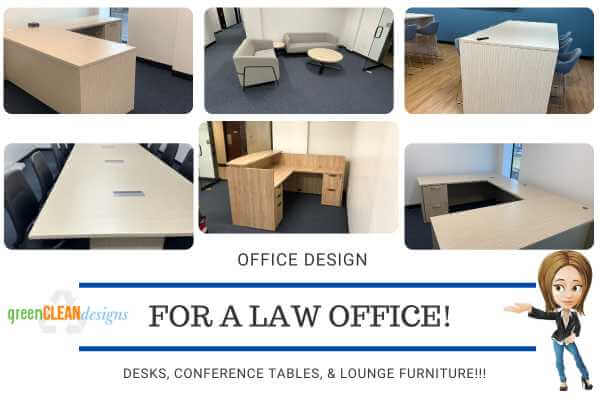
This Kansas City law firm had been in the same location for decades. New building, fresh start, every piece of furniture from scratch — a full Kansas City office furniture project from the floor plan to the final install.. New building, fresh start, every piece of furniture from scratch. The project included U shaped desks, L shaped desks, a 16-foot conference table, collaboration tables, a reception desk, and lounge furniture for the waiting area.
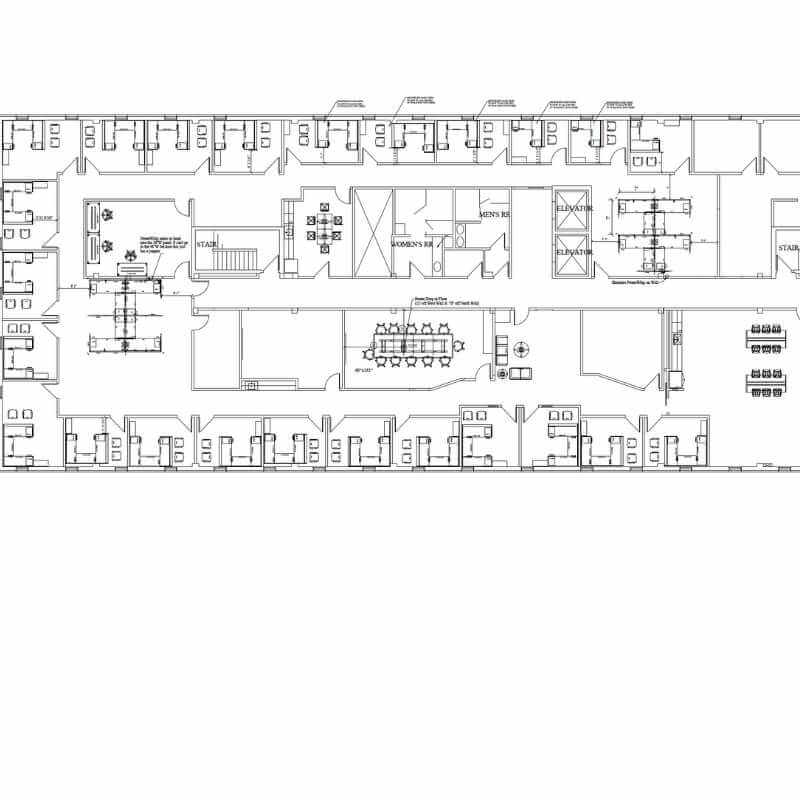
Law Office Floor Plan
You can see in this layout all the furniture we installed — private offices around the perimeter, open workstations for support staff, conference room, collaboration area, and reception.
You can see in this lay-out all the furniture we installed.
Private Offices for Law Firm
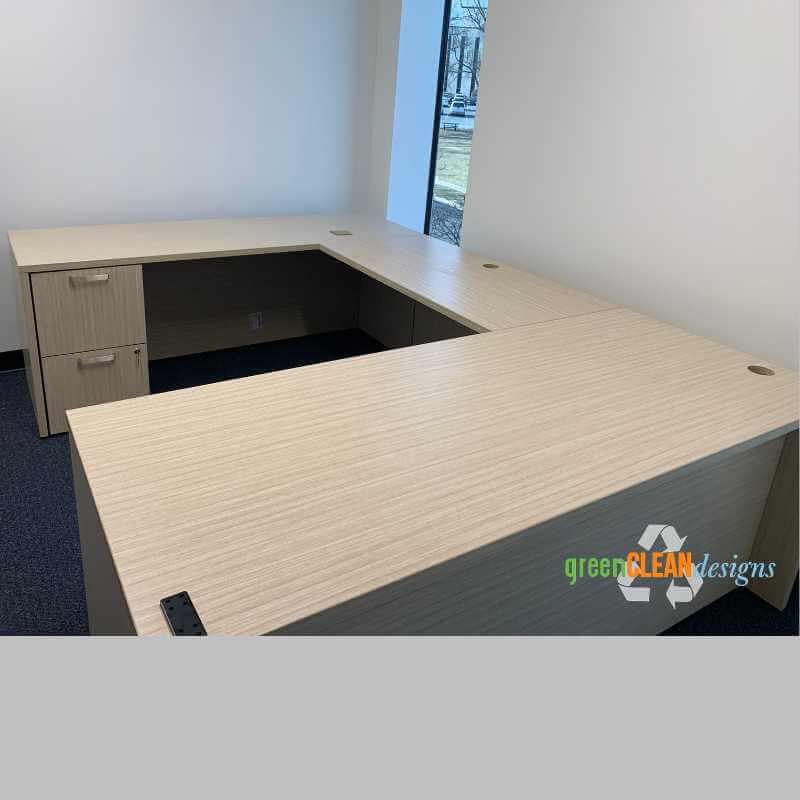
Attorney Desks — U Shaped and L Shaped
The largest part of this project was the private office desks. Most attorney offices got a U shaped desk, two guest chairs, and a bookcase.
In our first meeting, we walked around their existing offices to see how the attorneys actually worked. What we found: desk-and-credenza setups with 36-inch deep desktops by 72 inches in length. That was the standard years ago when large monitors sat directly on the desk surface. Modern attorneys do not need that depth.
We discussed whether moving to a 30-inch deep desk with a U shaped configuration would feel like too much of a change for partners who had worked at the deeper desks for years. In the end, the 30-inch desks were on quickship and the partners agreed the 6 inches of depth was not worth the longer lead time. The U shape gave them more usable work surface than the old desk-credenza setup — a return surface for open case files while the main surface handles the meeting or phone call in front of them.
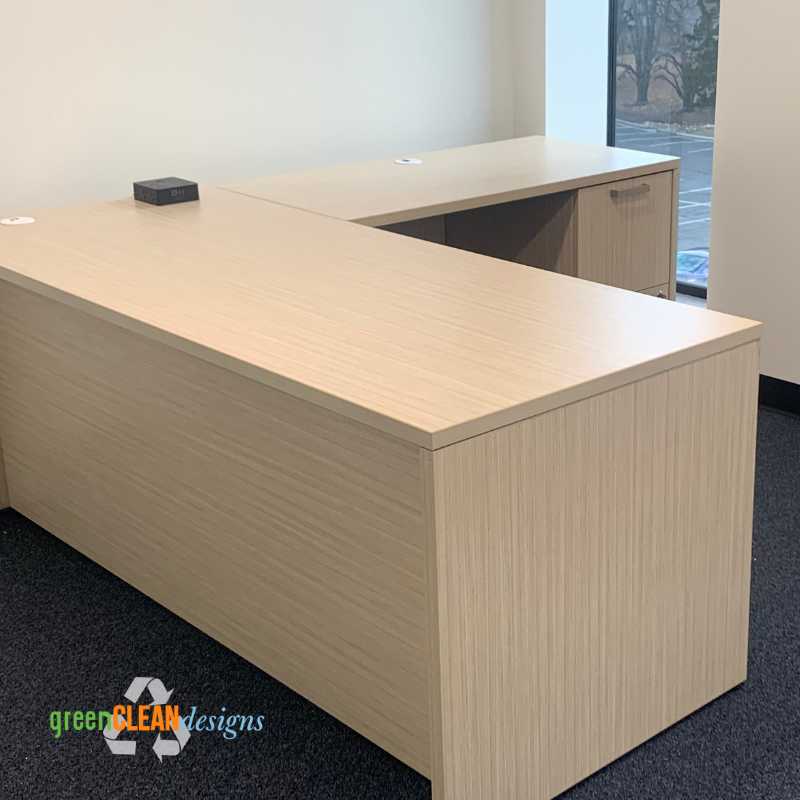
Junior partners got L shaped desks in the same Maritime Dune laminate. One tip from this install: think about power and data locations on the wall before you set the desks. This client brought power strips early in the install to help with desk placement. If we had received them after the desks were set, we would have had to move everything multiple times.
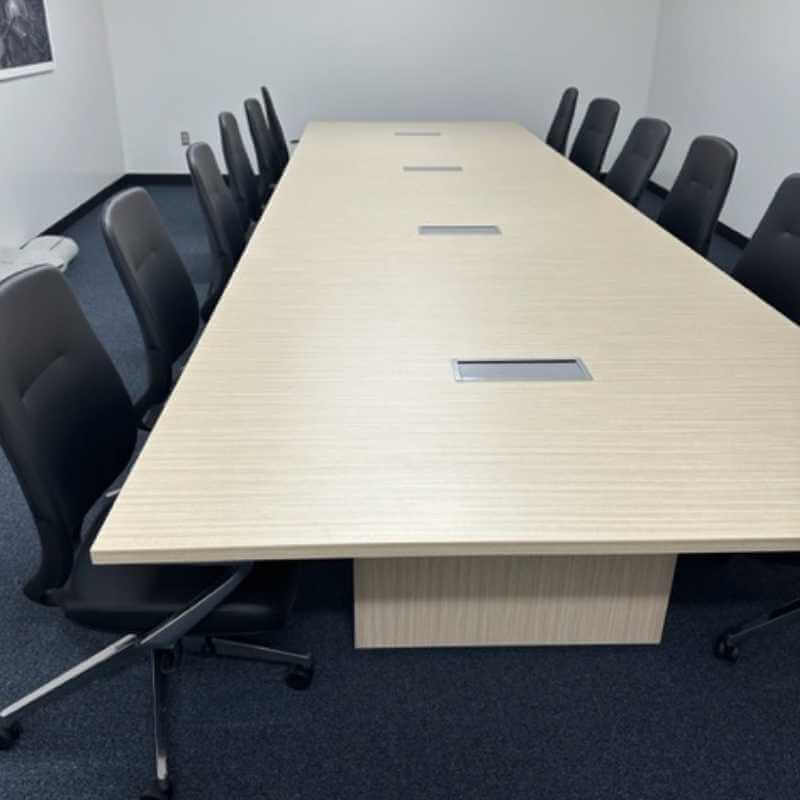
Conference Table for a Law Office
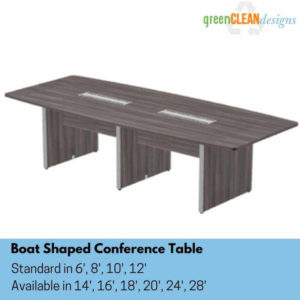
Every law firm needs a conference room that can handle depositions, client meetings, and internal case reviews. We used our conference room size calculator to match a 16-foot table to their room dimensions. Power grommets in the table surface let attorneys plug in a laptop without cables running to the wall. The laminate matches the private office desks for a consistent look throughout the firm.
Legal Support Workstations
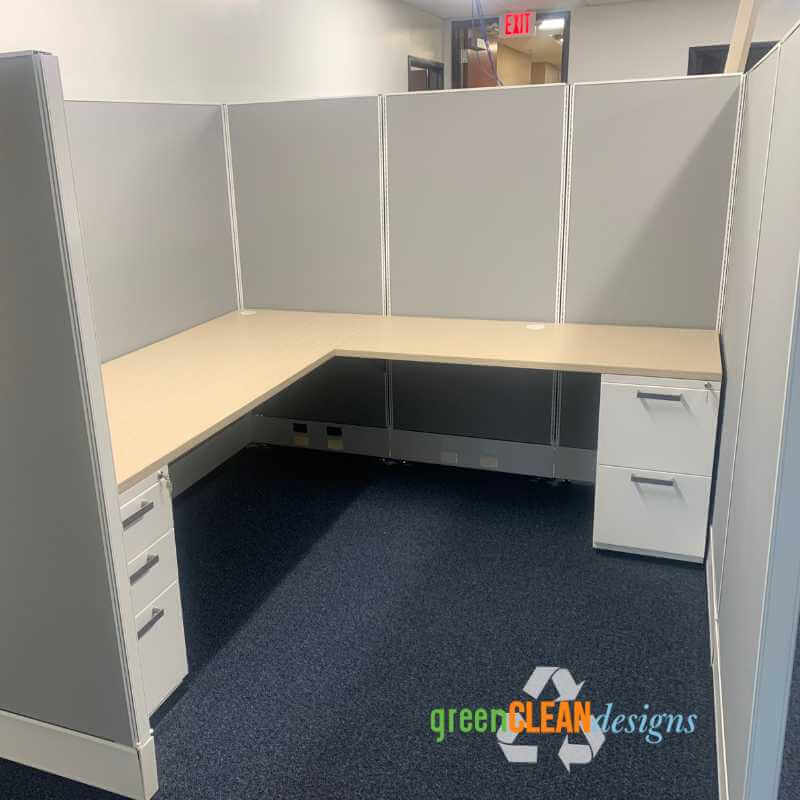
The paralegals and legal assistants in this firm needed privacy for document review and client file work, but not the fully enclosed offices the attorneys required. We installed 7×7 cubicles with tall panels — high enough to block conversational sound and visual distractions at seated height, while keeping the support area open enough for the quick collaboration legal work demands.
The 7×7 footprint gives each person a full L shaped work surface with room for dual monitors, file storage, and a small meeting space for when an attorney stops by to discuss a case. For law firms, this is the sweet spot between privacy and accessibility for support staff.
Collaboration Tables
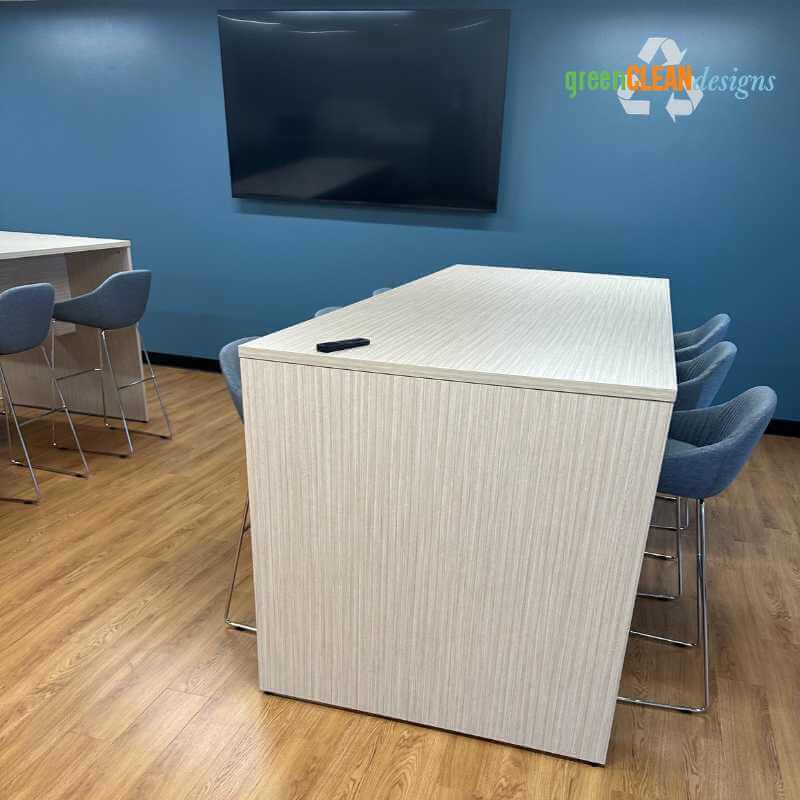
In addition to the main conference room, we installed bar-height collaboration tables for smaller meetings and informal case discussions. These 8-foot tables handle 3 to 4 people comfortably. The blue chairs coordinate with the accent wall — a detail that carries the firm’s brand throughout the space.
Waiting Room Furniture
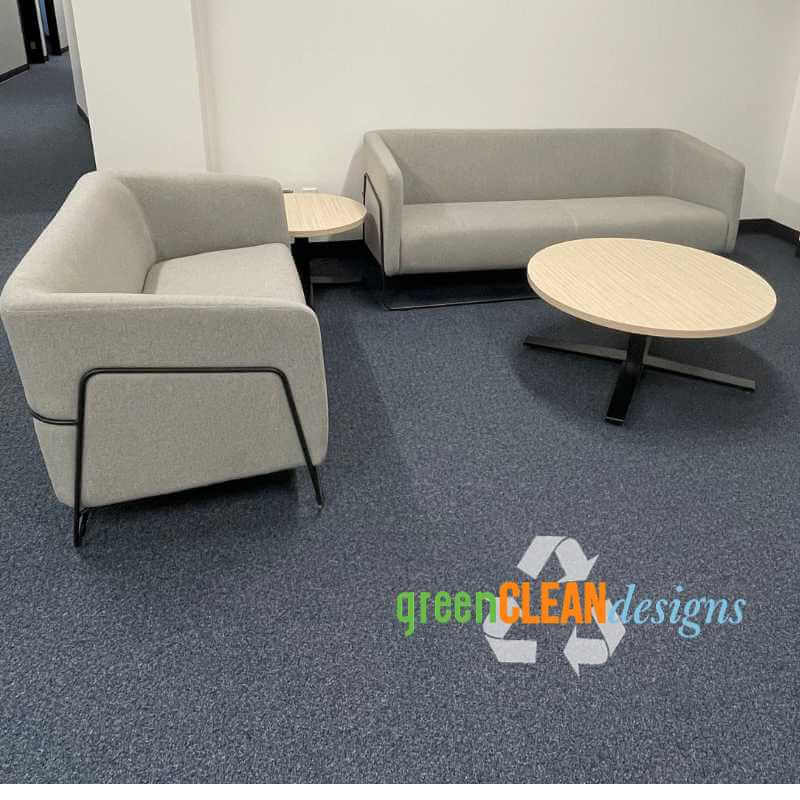
The waiting area is where clients form their first impression of the firm. We looked at the client volume — typically just a couple of visitors at a time — and recommended a sofa and love seat over individual chairs. The accent table laminate matches the rest of the office for a coordinated look. Commercial-grade upholstery that maintains its appearance after years of daily use.
Reception Desk
In the original plan, the firm was going to move their existing reception desk. Things never go completely as planned — the desk did not survive the move. We sourced an in-stock reception desk and had it installed shortly after. When you are on a tight timeline, having a supplier who carries ready-to-ship furniture makes the difference between a one-week delay and a one-month delay.
Kentucky Law Office — Corner Attorney Office with Sliding Door
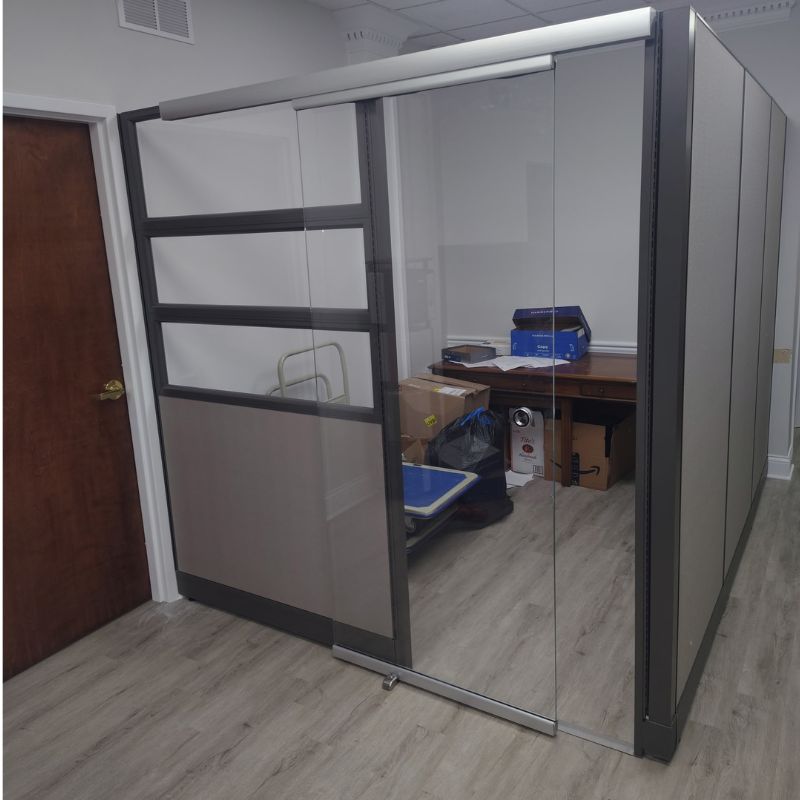
This was a different kind of project — a single corner office for an attorney who needed privacy for client consultations. The solution was a cubicle with a sliding door built to full height.
Why a sliding door instead of a swing door: the corner office dimensions did not leave room for a door to swing open without hitting the desk or guest chair. A sliding door gives the attorney the ability to close off the office completely for confidential conversations without losing any usable floor space.
The configuration uses Cadence Feather fabric panels with Medium Tone paint on the frame. Glass uppers let natural light pass through while the solid lower panels and full-height construction block conversational sound. For a law firm, this is the balance — you need the acoustic privacy of a closed room without the cost and permanence of drywall construction.
This is the same approach that works for any attorney office where traditional construction is not an option — whether you are building out a new lease space, adding offices to an existing floor plan, or converting an open area into private offices without a general contractor.
Chicago Law Office — L Shaped Desks and Bookcases
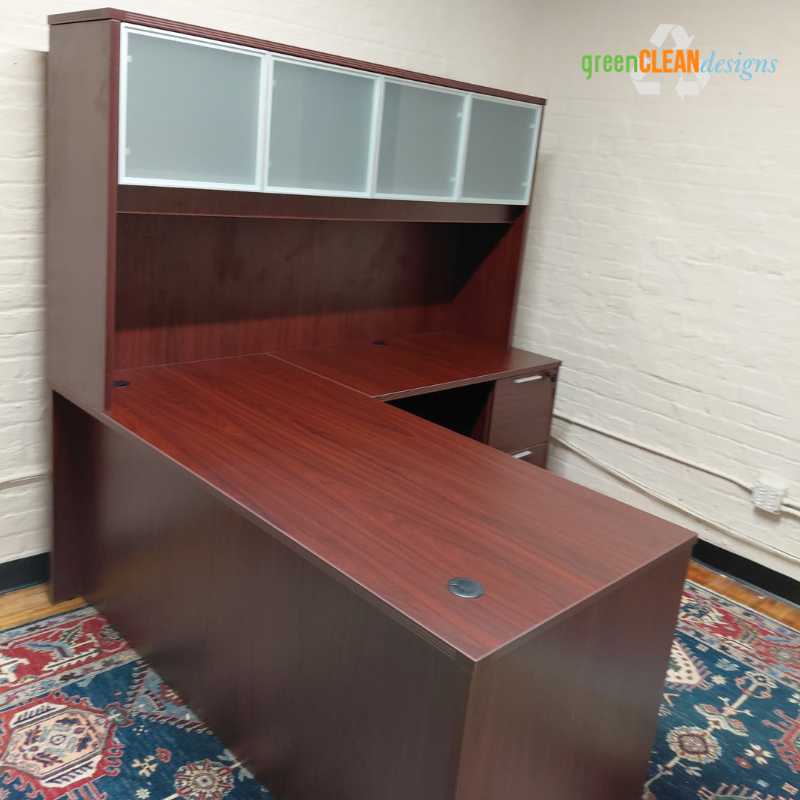
A Chicago law office came to us after their original Mayline desks — discontinued after Mayline was acquired — needed to be replaced. The challenge was matching the rich mahogany finish throughout their offices. We sourced two L shaped desks with hutches featuring frosted glass doors that matched their existing aesthetic perfectly.
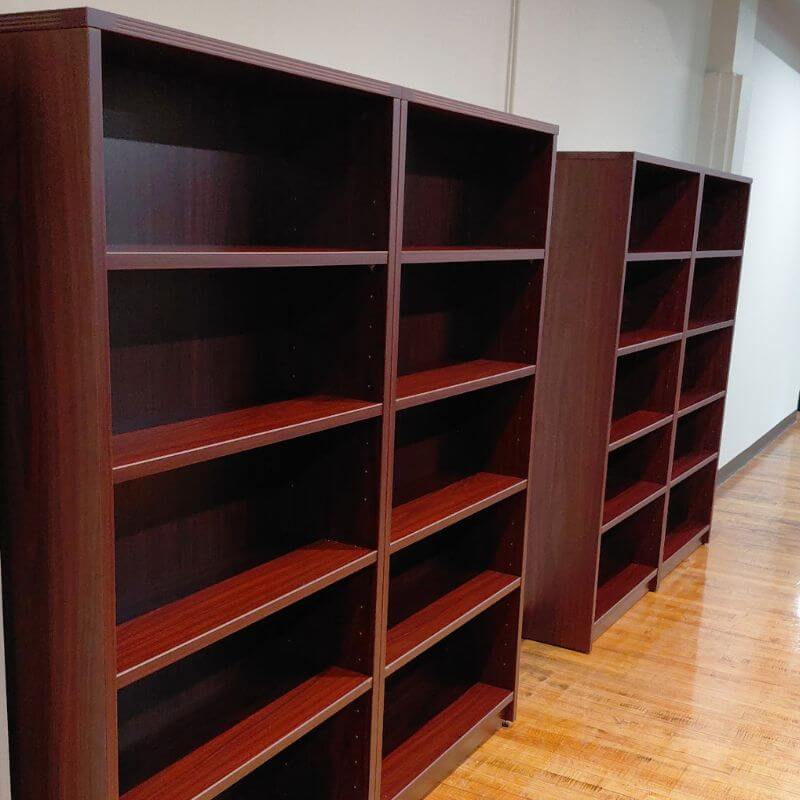
The firm came back for a second order — bookcases to complete the offices. That is how most law office furniture projects work. You start with the desks, then build out the storage, shelving, and accessories once you see how the space functions day to day.
Whether you are matching existing furniture or starting fresh, we handle the sourcing, coordination, and installation so you do not have to.
As the client shared after the install:
“Ruben and his team were WONDERFUL. Such hard-working guys.”
What We Recommend for Every Law Office
A law office buildout typically involves several product categories working together. Here is what we install most often for legal professionals.
Private Offices with Doors for Attorneys
Attorney offices need doors that close and walls that reduce sound transfer. Our cubicles with doors create fully enclosed offices without drywall construction. We build these from 85 inches to 107 inches tall — the taller configurations significantly reduce conversational bleed between offices. For a law firm, we typically recommend the tallest panels available with solid construction. Sliding doors work well for smaller offices where a swing door would eat into the usable floor space.
Open Workstations for Paralegals and Legal Assistants
Not every role in a law firm needs a door. Paralegals, legal assistants, and support staff work well in cubicle wall panelsconfigured at 53 to 67 inches. This gives them seated privacy for focused document review while keeping the workspace open enough for the collaboration that legal support work requires. For firms where paralegals handle sensitive case files, the taller panels provide the visual privacy that the work demands.
Executive Desks for Attorney Offices
We custom-build U shaped desks and L shaped desks in wood, laminate, and mixed finishes. U shaped configurations work well for attorneys because the return surface provides space for an open case file while the main surface handles the meeting or phone call in front of them. We size every desk to the specific office dimensions — especially important in law firms where offices vary from partner-sized to associate-sized within the same floor.
Waiting Room Furniture
Mismatched furniture or worn seating undermines the credibility you have spent years building. We carry waiting room chairs and seating designed for professional environments — clean lines, durable upholstery, and coordinated styles that communicate competence before anyone says a word.
Office Dividers and Sound PrivacyYour Attractive Heading
For open areas that need separation — between the reception desk and the office area, around a file room, or to create a paralegal workstation zone — our freestanding office dividers provide visual and acoustic privacy without construction. The acoustic panel options absorb conversational sound, which matters in a law firm where case discussions cannot carry into the hallway or waiting area. For the highest level of acoustic privacy, pair dividers with a sound masking system.
Start Your Law Office Furniture Project
Every project starts with a rough layout of your floor plan, moves to a rendering so you can see exactly how the space will look and function, and finishes with material and finish selection. Whether you are outfitting one attorney office or designing an entire floor — contact us to start the conversation.
Email nikim@greencleandesigns.com or call/text 913-701-4847.
Office Design Tips
Join our email list to receive our 5 Best Office Design Tips!